

Contemporary Population Issues, Sustainable Development, and Future Challenges: Bangladesh Perspectives
Published: 02-08-2026 Updated: 02-08-2026 05:35:24
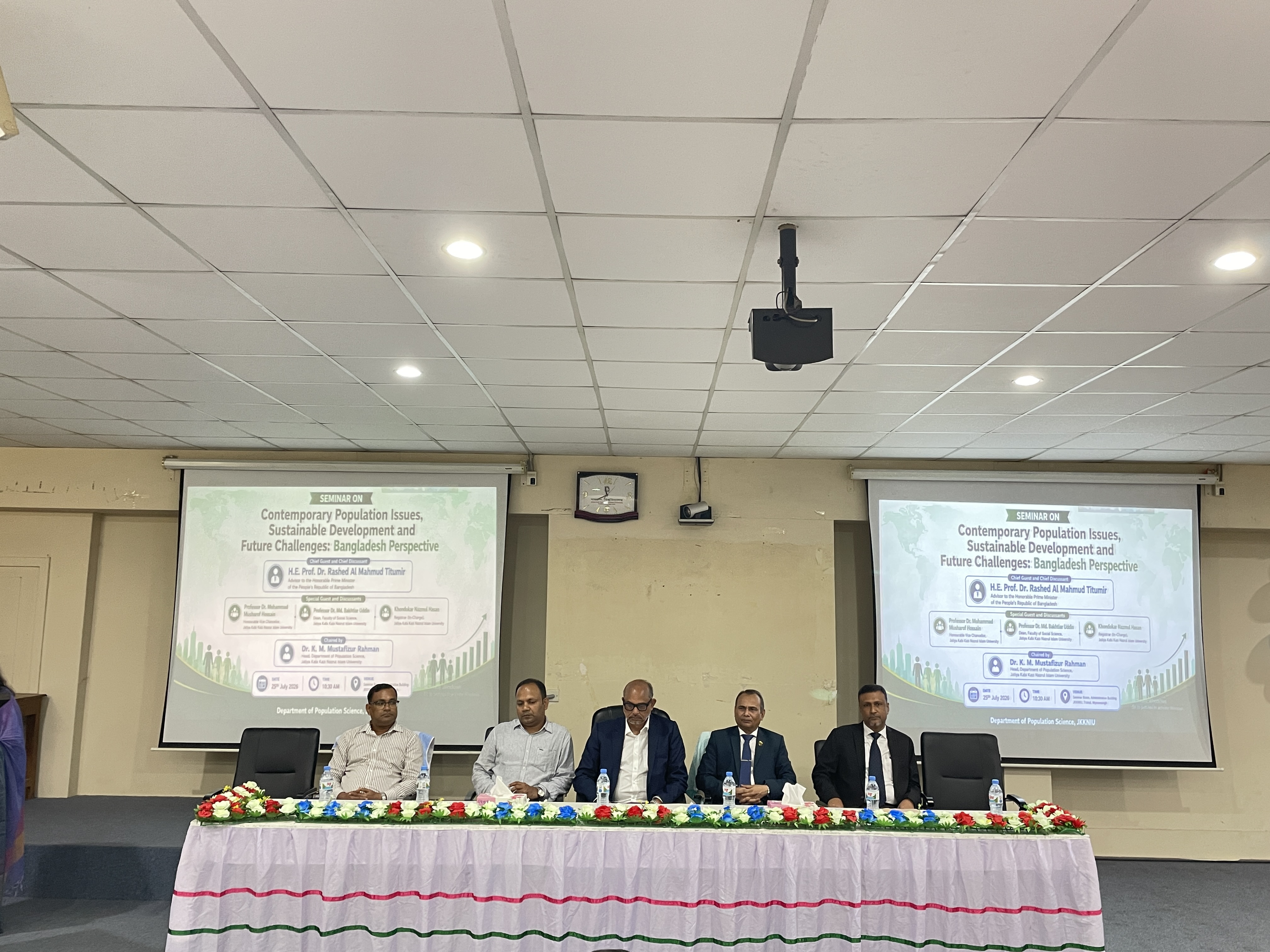
The Department of Population Science, Jatiya Kabi Kazi Nazrul Islam University, successfully organized a seminar titled "Contemporary Population Issues, Sustainable Development, and Future Challenges: Bangladesh Perspectives" on 25 July 2026.
The seminar was chaired by Dr. K. M. Mustafizur Rahman, Head of the Department of Population Science. The Chief Discussant of the seminar was H.E. Prof. Dr. Rashed Al Mahmud Titumir, Advisor to the Honorable Prime Minister of the People's Republic of Bangladesh. In his keynote discussion, he emphasized the importance of addressing contemporary population challenges through evidence-based policymaking, sustainable development strategies, and effective governance. He highlighted the need to strengthen human capital, improve demographic planning, and enhance research-based policy interventions to achieve long-term national development goals.
The seminar was further enriched by the presence of Professor Dr. Mohammad Musharof Hossain, Honourable Vice Chancellor; Professor Dr. Md. Bakhtiar Uddin, Dean, Faculty of Social Science; and Khondokar Nazmul Hasan, Registrar (In-Charge), who participated as Special Discussants.
The seminar was attended by all faculty members and students of the Department of Population Science, along with teachers from other departments of the University. An interactive discussion session followed the keynote presentation, during which participants exchanged views on current population dynamics, demographic transition, employment, urbanization, ageing, climate change, and the future development challenges of Bangladesh.
The Chair concluded the seminar by expressing sincere gratitude to the Chief Discussant, Special Discussants, distinguished guests, faculty members, students, and all participants for their valuable presence and contributions. He also thanked the organizing committee for successfully arranging the seminar and expressed hope that such academic events would continue to strengthen research, collaboration, and policy dialogue in the field of population science.